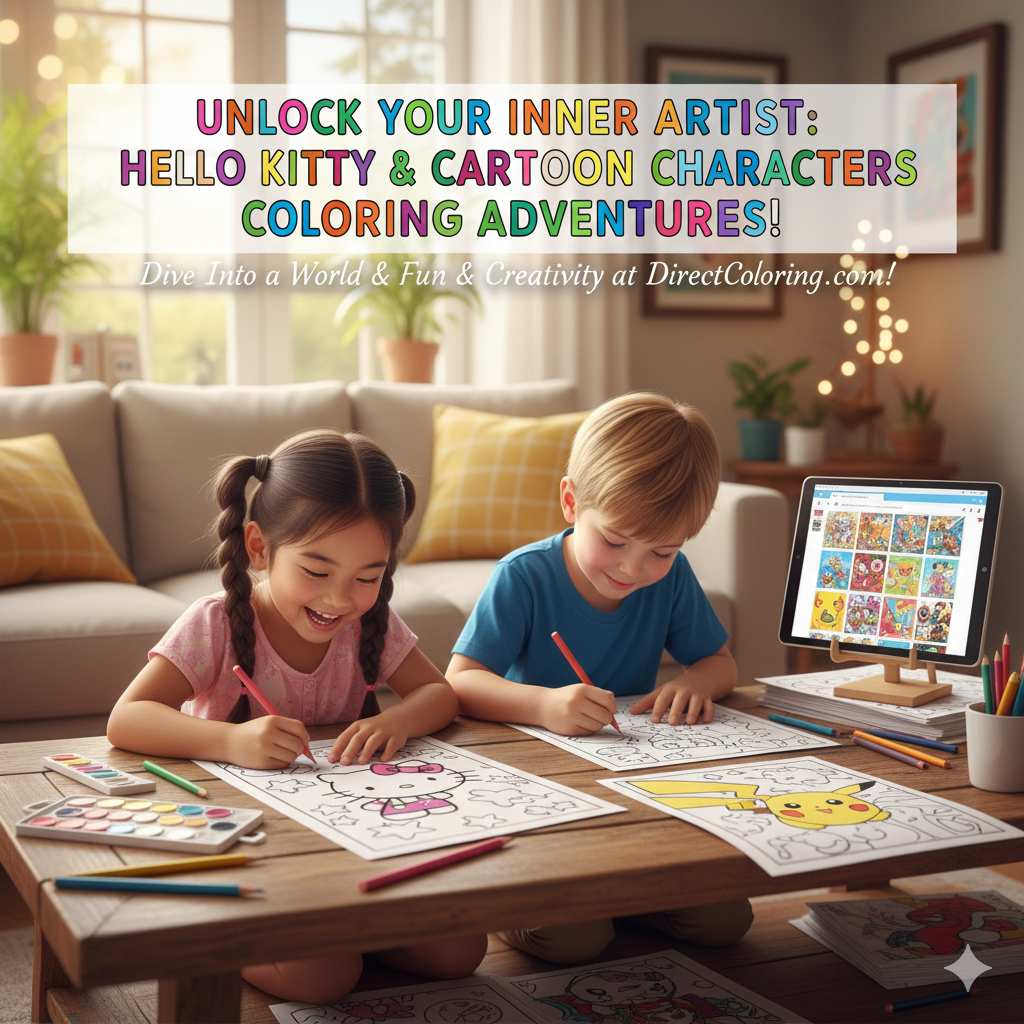
When eight-year-old Mia first discovered coloring, it was in the waiting room of a pediatric therapy center after her father’s deployment overseas. What began as a quiet distraction-filling in soft pinks and bright yellows-soon became a lifeline. Her mother remembers watching her carefully shade in a cartoon character with unusual focus:
“It was the first time in weeks I saw her breathe deeply and smile,” she recalls. “Coloring helped her feel safe enough to talk about what scared her.”
Stories like Mia’s are not rare. Across the United States, millions of children, parents, teachers, and mental health professionals are rediscovering the simple yet scientifically powerful act of coloring. Once considered merely a childhood pastime, coloring has now become a respected tool in emotional development, cognitive growth, creativity training, and even trauma recovery for all ages.
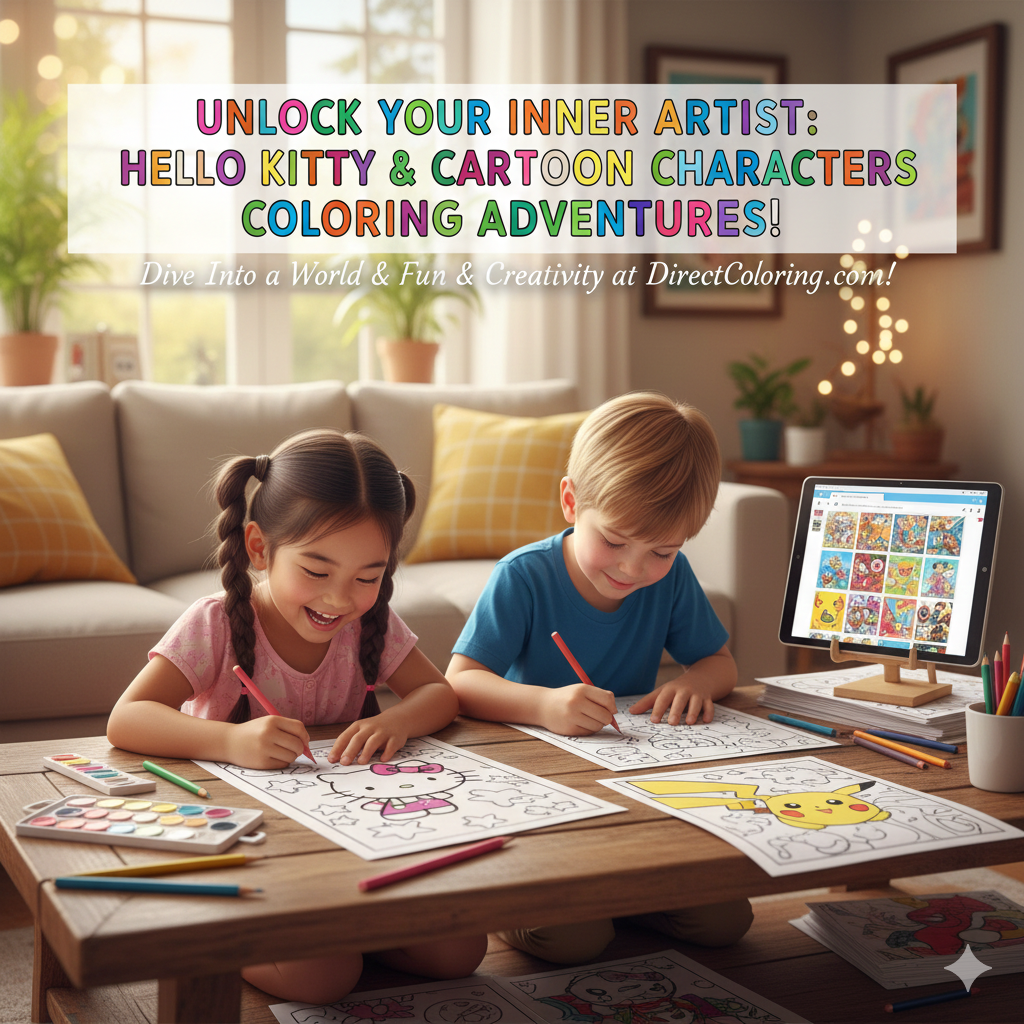
In schools, pediatric therapy offices, homes, and community centers, cartoon and character-based coloring pages are among the most engaging and effective resources available. And today, they are more accessible than ever, thanks to large online libraries such as Cartoon & Characters Coloring Pages, which give families, educators, and students access to thousands of printable illustrations that support both learning and joy.
Contents
Why Coloring Works: What Research Shows
Decades of psychological and neurological studies confirm what children instinctively know: coloring is profoundly beneficial.
According to a 2023 study published in the Journal of Psychology & Behavioral Science, structured coloring activity significantly reduces anxiety in school-aged children, increases attention span, and improves problem-solving skills through repetitive motion and focused creative decision-making.
Similarly, a widely referenced Harvard Graduate School of Education report on childhood creativity found that coloring supports three critical areas of development:
| Area of Development | Impact of Coloring |
| Cognitive & Academic Skills | Strengthens memory, logical reasoning, and spatial awareness |
| Emotional & Mental Well-Being | Reduces stress hormones, increases calm, supports self-expression |
| Social Learning | Encourages collaboration, communication, and empathy |
Art therapist Dr. Emily Rosen, who works with children experiencing grief, explains:
“When a child colors a character they love, they project comforting qualities onto that figure. This becomes a bridge to emotional communication-and sometimes that bridge is more powerful than words.”
Cartoon Characters and Connection
Children build deep bonds with fictional characters-they become friends, role models, protectors, even emotional safe havens. This is why cartoon and animated character coloring pages have such an extraordinary educational and therapeutic impact.
Familiar characters provide:
- Predictability and comfort during stressful times
- Story-based motivation, encouraging imagination and literacy
- Identity development through choosing colors, emotions, and narrative endings
- Increased participation in learning environments
Teachers across the country report that children who are resistant to writing or reading are willing to complete academic tasks when paired with character coloring activities. The national nonprofit Art in Education Initiative notes that coloring increases classroom engagement by up to 76% among reluctant learners.
That level of impact is one reason online platforms continue to expand themed resources-including beloved classics like kittens, animated heroes, friendship characters, and seasonal collections. One of the most widely requested categories among young artists today is Hello Kitty Coloring Pages, which educators say helps nurture kindness, positivity, emotional bonding, and self-confidence.
Coloring Across Generations
Coloring today is not just for children. Adults-including college students, parents, teachers, and professionals turning to coloring for stress relief and mindfulness. During the pandemic, adult coloring participation in the U.S. increased by more than 300%, according to Statista consumer research.
Neuroscientist Dr. Stan Peterson describes coloring as:
“One of the few activities that simultaneously stimulates the brain’s problem-solving regions while calming the amygdala, the center of fear and anxiety.”
In a culture overwhelmed by screens, noise, and constant demands, coloring creates space to breathe.
Many teachers now include coloring breaks in their classrooms, and family therapy practitioners use group coloring sessions to rebuild emotional relationships and communication.
The Emotional Science Behind Coloring
Coloring activates the parasympathetic nervous system, triggering relaxation responses similar to meditation. Brain imaging research at Johns Hopkins University found that coloring increases alpha wave patterns, which are linked to creativity and emotional resilience.
Psychologists highlight three essential mechanisms:
1. Predictable Rhythm
Repetitive motion reassures the brain-especially helpful for anxiety and ADHD.
2. Personal Expression
Color choices allow nonverbal release of internal feelings.
3. Sense of Completion
Finishing a page produces dopamine, building confidence and motivation.
The Future of Coloring in American Education
As schools integrate more art-based learning, educators advocate for coloring pages as essential, not optional. Districts in California, New York, and Texas are using character-themed coloring in literacy programs, STEM enrichment, behavior improvement strategies, and bilingual study modules.
Elementary teacher Jamie Turner from Dallas explains:
“Coloring opens the door for students who don’t yet know how to express themselves academically. It’s not a distraction-it’s preparation for deeper thinking.”
A Cultural Revival of Creativity
We live in a time when creativity is not just beautiful-it’s necessary. Employers list creativity among the top three most valuable workforce skills. Coloring helps build that foundation early.
But beyond academic and developmental advantages, coloring is something even rarer:
It is pure joy.
The laughter of children sharing crayons, the quiet focus of a teenager shading delicate details, the relief of a parent unwinding after a long day-these moments carry deep emotional weight. They are moments of connection, healing, and hope.
And that is exactly why resources that support artistic accessibility matter so deeply.
Digital collections like Cartoon & Characters Coloring Pages and beloved character-themed sets such as Kitty Coloring Pages ensure that creativity is available to every child, everywhere, regardless of economic background.
Final Reflection
Coloring is not a small childhood memory.
It is a lifelong language of imagination, comfort, self-worth, and community.
As Mia’s mother puts it:
“Coloring didn’t change our problems. It changed our strength to face them.”
In the hands of a child, a crayon becomes something powerful:
A tool of healing.
A bridge to learning.
A spark of creativity that might change a life.
And maybe-just maybe-the world needs more color than ever before.