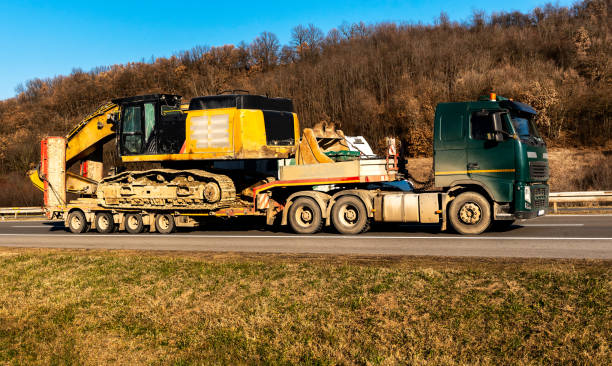
Transporting oversized construction machinery, like a fifty-ton excavator, is a high-stakes logistical challenge that demands precision and adherence to strict regulations. One error can lead to catastrophic damage to equipment, infrastructure, and human life. The process involves both balancing the machine’s center of gravity and navigating complex state and local transit permits.
Contents
Strategic Planning and Logistics
The physical act of driving the truck is actually the final step in a long process. The real work begins days or even weeks before the engine starts. Successful transport relies entirely on the quality of the preparation.
There is no universal rule for what constitutes an “oversized” load, as regulations vary state by state and even county by county. Generally, anything exceeding 8.5 feet in width, 13.5 feet in height, or 80,000 pounds in gross weight will require special permits.
You must obtain permits for every jurisdiction the load will travel through. If you are crossing state lines, you need to ensure your paperwork aligns with the specific requirements of each DOT agency. Failing to secure the right permits can lead to massive fines, impounded equipment, and project delays.
Route Surveys
GPS navigation apps are designed for passenger cars, not for 100-foot long setups hauling industrial cranes. A physical route survey is often necessary to identify potential hazards that a map won’t show.
Planners must look for:
- Vertical Clearance: Low bridges, overpasses, and power lines.
- Weight Restrictions: Bridges or roads that cannot support the concentrated weight of the machinery.
- Road Width and Turning Radius: Tight corners where a long trailer might bottom out or get stuck.
- Construction Zones: Temporary lane shifts that narrow the roadway.
Scheduling
Timing is everything. Many states restrict oversized load movement to daylight hours and prohibit travel during weekends or holidays. Furthermore, moving during rush hour in a metropolitan area is often illegal and always dangerous. Creating a schedule that accounts for these windows—while leaving a buffer for weather delays—is a critical part of the planning phase.
Selecting the Right Equipment
Using the wrong transport vehicle for the specific machine is a recipe for disaster. The trailer must be matched not just to the weight of the cargo, but also to its dimensions.
Trailer Selection
There are various trailer types used in heavy haulage, including flatbeds, step decks, and double drops. For extremely tall or heavy equipment, a Lowboy gooseneck trailer is often the preferred choice due to its low deck height, which helps accommodate taller loads without exceeding vertical clearance limits.
Understanding the trailer’s weight rating is non-negotiable. You must know the trailer’s concentrated load rating, which differs from its distributed load rating. A machine might fit within the total weight limit, but if its footprint is too small, it could damage the trailer deck.
Securing Devices
Gravity is not enough to keep a machine in place. You need strict tie-down protocols using chains and binders that are rated for the job.
- Chains: Use Grade 70 transport chains or higher. Never use a chain that has been welded or repaired.
- Binders: Ratchet binders are generally safer and allow for more tension control than lever binders, which can snap back and cause injury.
- Working Load Limits (WLL): The aggregate WLL of your tie-down system must be at least 50% of the weight of the cargo. However, many safety managers prefer to aim for 100% to ensure redundancy.
Visibility and Safety Gear
Oversized loads must be visible to the motoring public. This involves a standardized set of visual warnings:
- Banners: “Oversize Load” banners must be displayed at the front of the truck and the rear of the trailer.
- Flags: Fluorescent orange or red flags should be mounted on the widest points of the load to help other drivers gauge clearance.
- Lights: Rotating amber lights or strobe lights are required to signal caution.
Execution: Loading and Securing
Once the paperwork is signed and the rig is ready, the physical work begins. This is the most dangerous part of the process for the operator and the driver.
The Loading Process
Always load on level ground. Loading on a slope increases the risk of the machine sliding off the ramps or tipping over. The trailer and the ramps must be clean and free of mud, oil, or ice.
A “spotter” should always be present to guide the operator. The driver has limited visibility, and a spotter ensures the machine is centered on the deck. An off-center load can cause dangerous swaying during transit and may lead to a rollover on a curved off-ramp.
Immobilizing the Machine
Once the equipment is on the deck, it needs to be shut down correctly:
- Lower all hydraulic attachments (buckets, blades, booms) to the deck.
- Engage the parking brake.
- Shut off the engine and disconnect the battery if required.
- Lock the doors and cover the exhaust stack to prevent debris entry (or turbo spinning) during transport.
The Art of Tie-Downs
Federal regulations generally require a minimum of four tie-downs for heavy equipment (one at each corner), though more are required for heavier items or machines with attachments.
Chains should be pulled tight and positioned at opposing angles. This creates tension that prevents the machine from moving forward, backward, or side-to-side. Using edge protection is also vital; sharp edges on the machinery can slice through straps or damage chains over long distances.
Safety Protocols on the Road
Transporting the load requires a different driving style and heightened situational awareness.
Pilot Cars and Escorts
For loads that exceed specific dimensions, pilot cars (escort vehicles) are legally required.
- Lead Car: Drives ahead to warn oncoming traffic and check for height obstructions (often using a height pole).
- Chase Car: Follows behind to warn traffic approaching from the rear and to watch the load for any shifting.
Constant radio communication between the truck driver and the pilot cars is essential.
Braking and Following Distance
A fully loaded heavy haul rig takes significantly longer to stop than a standard semi-truck. Drivers must maintain a massive following distance to account for the increased momentum. Aggressive driving or sudden lane changes are impossible; every move must be calculated and signaled well in advance.
Periodic Inspections
The job isn’t done until the engine turns off at the destination. Drivers are required to stop periodically (usually within the first 50 miles, and then every 150 miles or 3 hours) to check the tension on the chains and tires. Loads can settle, and chains can loosen due to road vibration.
Conclusion
Transporting oversized construction machinery is a high-stakes operation that demands respect for physics and the law. It requires a synergy between the logistics team planning the route, the crew loading the equipment, and the driver navigating the road.