Last Updated on February 17, 2026 by Luxe
Key Takeaways
- Digital clean rooms provide a secure environment for multiple parties to analyze shared data without exposing raw datasets.
- Industries such as advertising, healthcare, and finance are leveraging clean rooms to enhance data collaboration while maintaining privacy compliance.
- Advancements in AI and machine learning are expanding the capabilities of digital clean rooms, enabling more sophisticated data analysis.
Table of Contents
- What Are Digital Clean Rooms?
- Benefits of Digital Clean Rooms
- Applications Across Industries
- Technological Advancements
- Implementing Digital Clean Rooms
- Challenges and Considerations
- Future Outlook
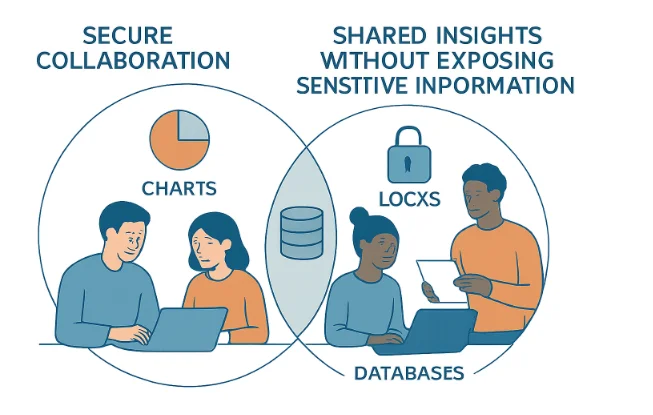
In a world where data privacy concerns are growing and regulations are tightening, organizations face unprecedented challenges in data collaboration. Harnessing the value of shared insights without exposing confidential information is a complex problem that digital clean rooms are uniquely positioned to solve. These cutting-edge solutions, sometimes called data clean rooms, provide a secure framework for multiple parties to collaborate, driving innovation while adhering to data privacy and security protocols. As sectors become more data-centric, the promise of digital clean rooms to enable safe and compliant collaboration is transforming the business landscape.
Digital clean rooms create an environment where organizations can jointly analyze data sets, generate insights, and build partnerships, all without the risk of revealing sensitive underlying information. From healthcare to advertising, the shift toward privacy-preserving technology is not only a competitive differentiator but a necessity for maintaining consumer trust and legal compliance. The increasing adoption of digital clean rooms is evidence of a broader trend toward responsible data sharing in line with evolving global standards.
This approach to data collaboration builds trust among partners and stakeholders. It empowers companies to gain meaningful insights and optimize strategies without incurring the risks of moving or duplicating data. With the integration of new technologies such as artificial intelligence and confidential computing, the sophistication and security of digital clean rooms continue to advance, making them indispensable to organizations dealing with sensitive or regulated information.
To further explore the growing impact of data privacy tools and how these innovations align with changing regulations, consult broader resources such as Forbes’ analysis of data clean rooms, which delves into the practical advantages and future potential across industries.
What Are Digital Clean Rooms?
Digital clean rooms are secure, virtual workspaces where organizations can merge and analyze datasets without ever sharing the raw data itself. The structure of a digital clean room ensures that sensitive information remains confined, allowing each partner to benefit from aggregated insights while upholding the strictest privacy standards. These environments are governed by rigorous access controls, algorithms that prevent re-identification of data, and robust auditing to log every interaction and computation. By design, participants collaborate transparently while protecting proprietary or regulated information, a capability that is increasingly critical in industries where data privacy is non-negotiable.
This innovation marks a significant departure from previous collaboration models, in which parties had to rely on physical clean rooms or complex legal agreements to protect their interests. The digital variant is faster, more powerful, and adaptable to evolving regulatory frameworks such as GDPR and CCPA, enabling organizations to remain both agile and compliant.
Benefits of Digital Clean Rooms
- Enhanced Privacy: Digital clean rooms deliver unparalleled privacy by preventing the exposure of individual identities or sensitive client files during collaborative analysis. Companies can safely extract trends and patterns without risking regulatory violations.
- Improved Data Security: The architecture of digital clean rooms retains the original data within a secure perimeter, fortifying defenses against cyber threats and unauthorized access. Even in the event of a breach, only aggregated findings, not raw information, can leave the secure environment.
- Efficient Collaboration: Teams and organizations avoid time-consuming processes of anonymizing or masking data for transfer. Insights are generated directly within the clean room, speeding up project timelines, reducing redundancies, and eliminating the risks of data duplication.
Applications Across Industries
The versatility of digital clean rooms enables their adoption across diverse sectors:
- Advertising: Marketers and publishers collaborate to refine campaigns and measure results by safely analyzing combined user data. For example, Snowflake’s Media Data Cloud enables organizations to access and collaborate on data without it ever leaving their Snowflake environment, facilitating essential first-party data matching, audience insights, and campaign measurement while limiting data movement and copying.
- Healthcare: Medical institutions, research organizations, and pharmaceutical companies can securely pool patient data to improve research outcomes and track population health, all while remaining compliant with health privacy regulations. Hospitals and research labs are increasingly employing digital clean rooms to advance COVID-19 research and other collaborative medical studies, as discussed by The Wall Street Journal.
- Finance: Banks, payment providers, and insurance firms leverage digital clean rooms for fraud detection across partners, joint risk analytics, and safe benchmarking, helping the sector fight cybercrime and improve compliance.
Technological Advancements
The capabilities of digital clean rooms are rapidly evolving thanks to new technologies:
- AI Integration: Artificial intelligence and machine learning expand the analytical power of clean rooms by enabling the identification of patterns, predictions, and deep insights that would be difficult for humans to detect. For instance, Salesforce’s Data Clean Rooms platform now incorporates AI-driven analytics, allowing companies to extract greater value from collaborative data projects.
- Confidential Computing: Advances in confidential computing allow sensitive data to be processed while encrypted, making it nearly impossible for unauthorized entities to access the underlying content, even during analysis.
These technical advances are central to the growing scalability and effectiveness of digital clean rooms as enterprise solutions for secure data partnerships.
Implementing Digital Clean Rooms
Organizations that want to leverage the benefits of digital clean rooms can follow a clear implementation path:
- Assess Data Needs: Begin with a thorough analysis of collaborative objectives and the types of data that need protection or sharing.
- Select a Platform: Evaluate digital clean room providers based on their alignment with business requirements, security protocols, and users’ familiarity with relevant regulations.
- Establish Governance: Craft granular access policies, user roles, and operational guidelines to govern who can see what information, under which circumstances, and for what purposes. This includes implementing robust monitoring and compliance checks.
Challenges and Considerations
- Regulatory Compliance: Navigating different privacy laws and ensuring that all activities within a clean room are fully compliant is a significant undertaking, especially for multinational organizations.
- Technical Integration: For clean rooms to operate efficiently, they must be compatible with existing infrastructure, a process that may demand updates to workflows or investment in new tools.
- Trust Among Partners: Building and maintaining mutual trust is critical. All participants must feel confident that their data, as well as their customers’ privacy, remains fully protected throughout the collaborative process.
Future Outlook
The adoption of digital clean rooms is set to accelerate as businesses of all sizes seek innovative, secure methods for data collaboration. Emerging enhancements in artificial intelligence, regulatory automation, and security controls will shape the next generation of clean rooms, making these tools even more robust and user-friendly. As industries become more data-reliant and regulations more complex, digital clean rooms will become a linchpin in the modern digital ecosystem, balancing the twin imperatives of innovation and privacy.
To stay ahead of the curve in secure data collaboration, organizations should actively monitor technological advances and regulatory shifts, and invest in training teams to utilize digital clean rooms effectively. As these capabilities mature, they will unlock new avenues for strategic partnerships and competitive advantages that respect the evolving expectations of consumers, regulators, and business partners alike.