Last Updated on March 14, 2026 by Luxe
Key Takeaways
- Performance Enhancement: Banked tracks help improve athlete speed and minimize strain, especially around turns.
- Facility Versatility: Flat tracks are ideal for multi-purpose venues and varied community events.
- Budget Factors: Banked tracks, particularly those with adjustable hydraulics, cost more to install and maintain, while flat tracks are generally more affordable.
Choosing the right type of indoor track is one of the most influential decisions when developing a track facility. Whether it is for school athletics, community recreation, or high-profile competitions, understanding the differences between banked and flat tracks is essential. Each comes with distinct benefits, potential challenges, and impacts on athlete performance and facility versatility. Before you break ground, take time to compare key factors that will guide your decision. For expert assistance in design and construction, consider resources like Miller Sports track construction to help visualize your options and make the right choice for your needs.
The type of track you select influences not just athletic results but also the ways your facility can be used throughout the year. From costs to performance and flexibility, both banked and flat tracks offer unique solutions. Facility managers, coaches, and stakeholders must weigh these characteristics to align long-term vision with immediate practicality.
Understanding Banked Tracks
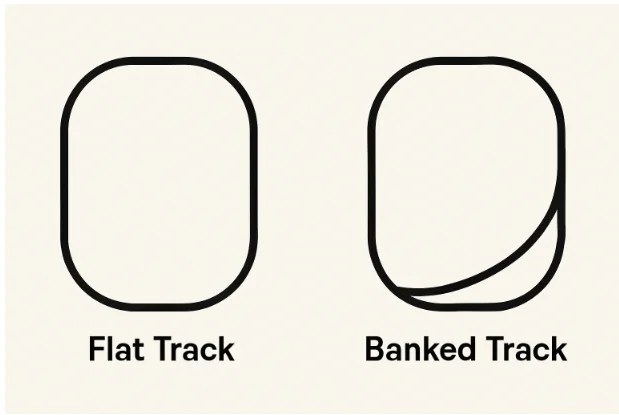
Banked tracks introduce a unique architectural feature: curved, inclined lanes designed to counteract the outward force athletes feel as they round corners. This banking allows runners, especially sprinters and middle-distance competitors, to maintain greater speeds through turns, resulting in consistently faster lap times compared to flat tracks. Notably, some modern systems, such as the one at Liberty University, employ hydraulically adjustable curves. These innovations let facilities adapt the incline for specific events or competition levels.
The science behind banked tracks is straightforward. By elevating the outer edge of the curve, the track helps runners counterbalance the centrifugal force pulling them away from the center, which means less deceleration and lower risk of injury. These benefits are crucial for hosts planning to attract high-caliber competitions or teams focused on athlete development. According to Beynon Sports, many record-breaking performances have occurred on banked indoor tracks, underscoring their role in enhancing competitive outcomes.
Exploring Flat Tracks
Flat tracks remain the standard for many facilities due to their simplicity and affordability. Unlike banked tracks, the curves are level with the surface, making installation less complex and, therefore, less costly. Flat tracks maximize available space and are often chosen for multipurpose venues that host not only athletic events but also other activities, such as indoor soccer, fitness classes, or community fairs.
The tradeoff for this versatility is a slight increase in athletic strain during turns. Without the angled curves to support runners, participants must work harder to maintain speed, especially in high-velocity events. This challenge can affect sprint and middle-distance results, as athletes experience greater inertia when entering and exiting the bends.
Performance Implications
The impact of track design on competition outcomes is well documented. Banked tracks allow athletes to navigate curves more efficiently, minimizing deceleration. This advantage can translate into fractions of a second that make the difference between podium finishes and missed opportunities. The most significant improvements in time occur in events like the indoor 200-meter and 400-meter dashes, where banked tracks consistently outperform their flat counterparts.
For training facilities with a focus on elite or collegiate teams, this performance boost can drive recruitment and program success. However, for recreational or multi-use centers, the enhanced speed may be less consequential compared to cost and ease of maintenance.
Versatility and Usage
When it comes to facility adaptability, flat tracks hold a clear edge. Their level surface and unobstructed curves make the space suitable for diverse activities. Event organizers can quickly repurpose these tracks for non-athletic events, providing year-round value to the community. The lack of banked inclines reduces conversion time and increases scheduling flexibility.
Banked tracks, in contrast, are inherently specialized. The engineered curves serve competitive running well, but can restrict set-up for other sports or public functions. Facilities with solely athletic programming may find this a reasonable compromise, but multipurpose centers often need broader functionality.
Cost Considerations
The budget is often a pivotal factor in facility planning. Constructing a banked track involves more labor, higher material costs, and potentially complex engineering, especially if hydraulics are involved for adjustable banking. These upfront expenses can stretch capital budgets and increase long-term maintenance needs. Flat tracks, by comparison, present a more manageable option for organizations with financial limitations.
It is important to remember that while flat tracks save on upfront investment, their long-term versatility may generate additional revenue from rentals and alternative programming. Factoring in future operational costs and revenue streams can create a clearer picture of the total cost of ownership for each option.
Making the Right Choice
Ultimately, the decision hinges on aligning the track’s features with your facility’s mission. Competitive-focused venues aiming to draw high-level meets may find the performance advantage of a banked track worth the extra investment. Schools, recreation centers, and community facilities may prioritize a flat track for its flexibility, affordability, and multi-use potential.
Carefully assess your expected event schedule, target user base, and available funds. Speak with experts, review case studies, and visit similar venues to compare how each type of track fits day-to-day operations. Your stakeholders and athletes will appreciate a well-considered approach that meets both present needs and future opportunities.
With the right choice, your facility can foster strong athlete performances, host memorable events, and serve the needs of your community for years to come.