Last Updated on February 28, 2026 by Luxe
Key Takeaways
- Consistent upkeep prevents dirt and grime from dulling tiles.
- Attention to grout maintenance stops stains and prolongs integrity.
- Selecting gentle, pH-balanced cleaners protects tile surfaces.
- Minor protective steps greatly reduce the risk of scratches and cracks.
Table of Contents
- Introduciton
- Regular Cleaning Practices
- Grout Maintenance
- Choosing the Right Cleaning Products
- Protective Measures
- Addressing Stains and Damage
- Professional Assistance
- Conclusion
Tile surfaces enhance the beauty and durability of homes and commercial spaces alike, but routine care is essential to keep them in peak condition. Whether you have tile in kitchens, bathrooms, or entryways, simple habits and the right techniques make a profound difference in their longevity. Many homeowners turn to kitchen refinishing for transformative results, yet ongoing maintenance remains a top priority for preserving the appearance and durability of all tiled areas.
With a few easy steps, you can avoid the common pitfalls that diminish the look and lifespan of tiles. Proper cleaning, diligent grout care, and thoughtful protection work together to ensure your surfaces retain their original beauty. Neglect and harsh products often cause preventable deterioration, so being proactive rewards you with lasting shine and functionality. Tiles that are well cared for can withstand heavy traffic and daily use without losing their charm.
Regular Cleaning Practices
Daily dirt and debris can rapidly diminish the look of your tile. Routine sweeping or vacuuming removes grit that, if left unattended, can scratch and cloud surfaces. Mopping is another important habit; always use warm water mixed with a mild, pH-neutral detergent and wring your mop thoroughly to minimize excess moisture. Overwetting can damage grout and promote mold or mildew growth. While some may consider using steam mops, these can weaken grout over time, so it is safer to avoid them and stick to traditional methods. According to Good Housekeeping, regular maintenance not only sustains a sparkling appearance but also makes deeper cleans much easier down the road.
Grout Maintenance
Grout lines are particularly vulnerable because they are porous and absorb liquids and debris more readily than tiles themselves. To protect grout:
- Sealing: Experts recommend applying a high-quality penetrating sealer about 3 days after installation, then resealing the grout annually. This process helps block out staining agents and moisture that could lead to cracking or deterioration.
- Cleaning: Weekly maintenance with a gentle scrub of water and baking soda often suffices for routine upkeep. For stubborn spots, a mix of baking soda and hydrogen peroxide provides a deeper clean without resorting to harsh chemicals that could wear down the grout or surrounding tile.
Maintaining grout protects your tile investment and ensures the tiled area maintains a unified, clean finish.
Choosing the Right Cleaning Products
The type of cleaner makes a big difference in preserving tile strength and sheen. For most tile varieties, a pH-neutral cleaner is ideal for avoiding residue or damage. Pay close attention to the specific needs of your tile material. For example, acidic cleaners like vinegar can easily etch or dull natural stone, while untested products may stain or degrade certain ceramics. It is wise to always test a small patch before widespread application. These simple precautions prevent costly, unnecessary repairs and preserve your surfaces’ finish.
Protective Measures
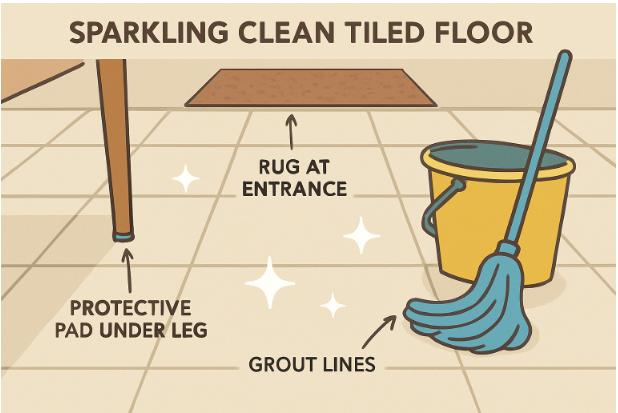
Preventative methods not only retain your tile’s pristine appearance but also minimize day-to-day wear. Strategic placement of mats at entrances and rugs in high-traffic areas catch dirt and reduce abrasion. To protect tile from furniture scratches, affix felt or rubber pads to the legs of chairs and tables. Always lift heavy objects rather than dragging them across the surface, as this prevents accidental chips and cracks. These considerations significantly increase the lifespan of tile surfaces and streamline future maintenance.
Addressing Stains and Damage
Spills and stains are inevitable, but prompt attention makes a difference. For greasy marks, a blend of warm water and mild dish soap is usually effective. Ink stains respond well to diluted hydrogen peroxide, while coffee or tea stains are best addressed with mild detergent and water as soon as possible. For those persistent, tough stains, do not hesitate to contact a professional. Using aggressive chemicals or abrasive tools risks etched marks or spreading the stain further, so expert advice can save both the surface and your peace of mind.
Professional Assistance
Even with conscientious daily and weekly routines, tiles may eventually require services beyond a homeowner’s capabilities. Professionals offer deep cleaning, advanced restoration, and expert repairs that return tiles and grout to their original condition. Enlisting help ensures that you do not unintentionally damage your tiles or grout during maintenance and can help to substantially extend the life of your installation.
Conclusion
Overall, keeping tile surfaces looking their best is manageable. Building cleaning and maintenance into your weekly schedule, caring for grout, being selective with cleaning products, and adopting simple protective measures are the core strategies that prevent the most common issues. Quick responses to spills and periodic consultations with professionals give you peace of mind and lasting satisfaction with your tile investments. This attention to detail ensures every tiled space consistently delivers both its aesthetic and practical benefits.